
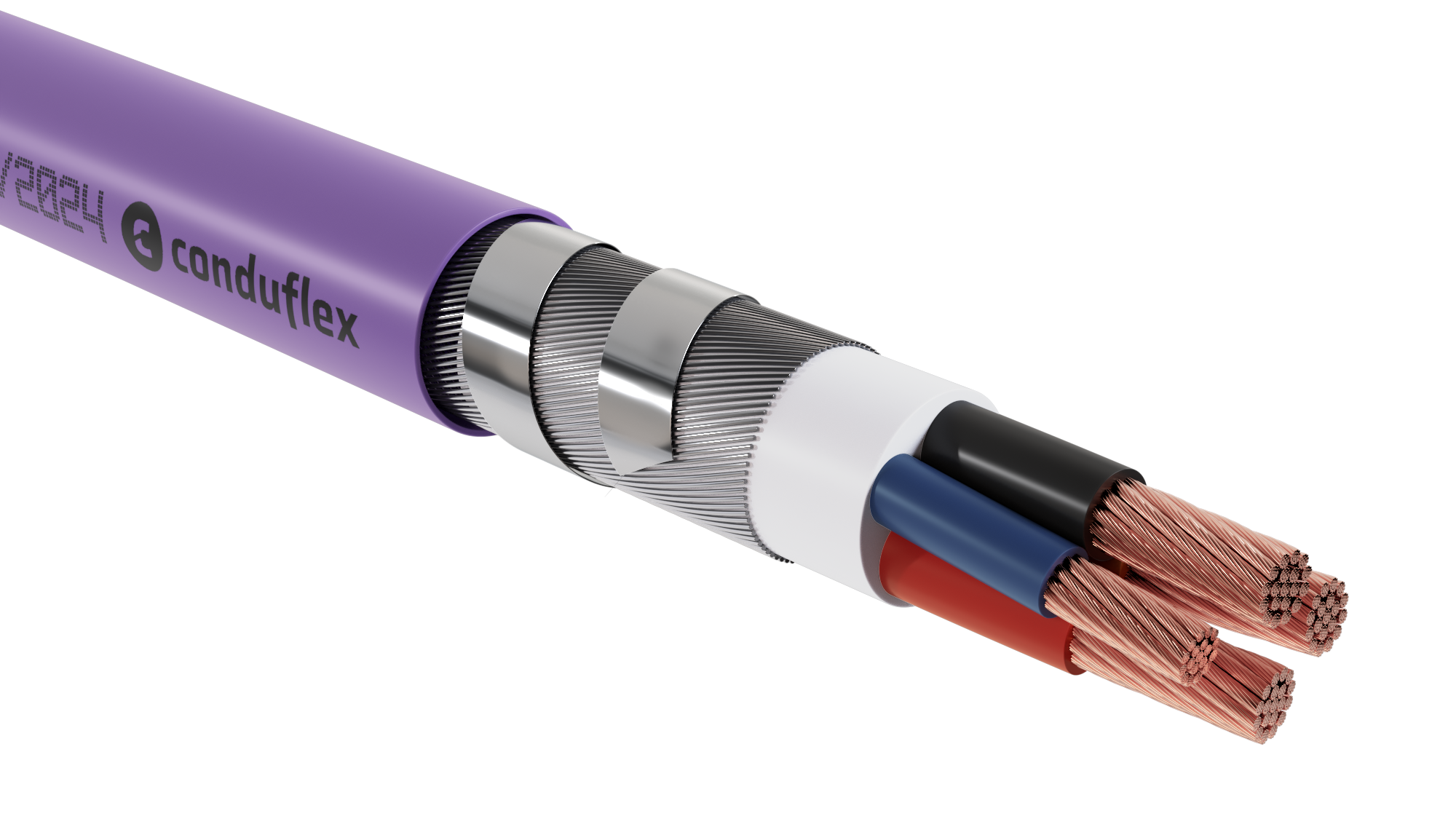

Armored Power Cable
Flexible copper cable, XLPE insulation 90 °C, phases bundled with extruded bedding of PVC Hydrocarbons resistant, galvanized steel wire armor with counter twist, PVC Hydrocarbons sheathing. The cable does not propagate fire, has low hydrochloric acid emission, resists hydrocarbons and sunlight. Suitable for Class 1 Division 2, Class 2 Division 2, and intrinsically safe applications according to NEC. Suitable for Zone 1 and 2, and Zone 0 with intrinsic safety according to IEC 60079.
For use in these industries
Infrastructure and Transportation
Oil & Gas
Mining
Building industry
Power Generation
Energy Distribution
Properties

Flexible

Grounding
Oil Resistance

Water Resistance

Fire Resistance

Cold Resistance

Sun Resistance

Temperture
Technical assessments
Datahseets
Caracteristicas constructivas
Características eléctricas y capacidad de carga
Applicacations
AEA 90079
EXPLOSIVE ATMOSPHERES Classification of Areas Explosive Atmospheres IEC 60079
AEA 90364
Regulations for the execution of electrical installations in buildings
AEA 95101
Regulation of underground external energy and telecommunications lines
AEA 95150
Regulations for the execution of low-voltage electrical supply and measurement installations
AEA 95703
Regulations for the execution of electrical lighting installations on public roads
Engineered to Meet Quality Standards
Quality You Can Trust

Instituto Argentino de Normalización y Certificación
Asociación Electrotécnica Argentina